What to Expect at Your Adjustment of Status Interview in Chicago

Preparing for an Adjustment of Status interview in Chicago can feel like a mix of excitement and nerves all rolled into one. You’ve made it through the paperwork, the waiting, and the endless checking of your case status, and now the day of your interview has finally been set. Naturally, you’ll have a lot of questions. What will they ask? How long will it take? Is it going to be an intensive process or a relatively simple one?

The good news is that most Adjustment of Status interviews are far less intimidating than applicants expect. With a little preparation and a clear idea of how the process works, you can walk in feeling confident and ready when the day finally arrives.

At Ibrahim Law Office, our Chicago immigration attorney has helped countless applicants establish lawful permanent residency in the U.S. With this guide, our goal is to offer straightforward answers to common questions concerning the Adjustment of Status interview in Chicago. If you have more questions or wish to begin the Green Card process, connect with our office at (312) 767-8611.

What Is an Adjustment of Status Interview?

The Adjustment of Status interview is part of the process that lets certain immigrants apply for permanent residency without leaving the United States. Instead of going through a U.S. embassy abroad (Consular Processing), these applicants are able to complete the final steps of the Green Card process right here in the U.S., in this case at the Chicago USCIS Field Office.

The interview gives USCIS a chance to confirm that everything in your application aligns with reality. Officials check your identity, your immigration history, and your eligibility for a Green Card to ensure your application is correct and your eligibility is valid. For marriage-based cases, they also confirm that the relationship is genuine and ongoing.

Preparing for Your AOS Interview in Chicago

Preparation is essential for building confidence ahead of your Adjustment of Status interview. You don’t need to memorize scripts or rehearse answers in front of a mirror for hours, but you do want to refresh your memory before interview day.

Go back and read through your entire application packet. Look at your Form I-485, the underlying petition, and any supporting documents you submitted. Pay attention to dates, addresses, job history, and travel history. Officers often ask questions directly from the forms, and it helps when your answers match what’s on paper.

If anything in your life has changed since filing, like a new job, a move, or additional trips outside the country, be ready to talk about it and show updated documents. USCIS expects life to continue while applications are pending.

If you’re working with a Chicago immigration attorney, they’ll usually walk you through a mock interview or at least highlight areas that might raise questions. That extra prep can help to calm nerves as you get ready for the AOS interview.

Documents to Bring to the Interview

Showing up without essential documents can slow down the process, even if your case is otherwise solid. Bring originals and copies, neatly organized if possible. Here’s a general checklist most applicants bring along:

For marriage-based cases, you’ll also want updated proof showing you’re building a life together. Officers prefer recent evidence submitted alongside older documents.

What to Expect When You Arrive at the Chicago USCIS Office

Plan to arrive about 15 to 30 minutes early. The Chicago USCIS office runs like a government building mixed with airport security, and getting there early can reduce stress. You’ll go through a security screening, so keep bags simple. Phones are usually allowed, but you won’t be able to use them during the interview.

After security, you’ll check in at the front desk using your interview notice, then take a seat in the waiting area. The waiting room is usually quiet, populated with people from around the world on their own immigration journeys. When your name is called, an officer will retrieve you and walk you to their office.

What Happens During the Interview

The interview usually starts with the officer placing you under oath. While you are under oath, you are legally bound to tell the truth. Then they’ll verify your identity by checking your ID and passport.

Next comes a review of your application. The officer may go through your Form I-485 line by line, confirming details such as your name, address, employment, and immigration history. Some officers move quickly, others take their time. Both styles are normal.

You’ll also be asked a series of yes-or-no questions that deal with admissibility. These cover things like prior immigration violations, criminal history, and security-related topics. Even if the questions sound serious, most applicants truthfully answer “no” across the board and move on.

The key here is honesty and calm. If you don’t understand a question, ask the officer to repeat or explain it. That’s perfectly fine and happens all the time.

Marriage-Based Adjustment of Status Interviews

Marriage-based interviews get extra attention because USCIS is required to confirm that the marriage is real. Most couples are interviewed together, sitting side by side. The officer may ask questions about how you met, how your relationship developed, and what daily life looks like now. They’re looking for natural, consistent answers that reflect a shared life.

You might be asked about things like:

Some cases involve separate interviews, but that’s less common and usually tied to specific concerns. Many couples leave the interview saying it felt more conversational than expected.

Common AOS Interview Questions

Every interview is a little different, but there are certain questions the officers ask everyone.

The officer will often start by going through your application line by line to verify details, then move into specifics based on your category (marriage, family, employment, etc.).

They will ask things like:

Answer everything clearly, honestly, and without overthinking. Short answers are usually enough unless the officer asks for more detail. Silence after an answer doesn’t mean you did something wrong. Sometimes officers are just documenting.

Possible Outcomes After the Interview

When the interview wraps up, the officer may explain what happens next. Sometimes you’ll hear a decision right away. Other times, you’ll be told the case needs further review. There are a few common outcomes:

  1. Approval on the spot, followed by a Green Card in the mail
  2. request for additional evidence if something is missing
  3. A decision mailed after further review

Not getting an immediate answer doesn’t mean bad news because many approvals come days or weeks later, after internal checks are completed.

When to Contact an Immigration Attorney

Many people attend their AOS interview without a lawyer and do just fine. Still, some situations benefit from legal guidance. If your case involves past immigration violations, criminal issues, prior denials, or complex facts, speaking with an immigration attorney can provide peace of mind.

Attorneys can attend the interview with you, help respond to tough questions, and step in if issues come up unexpectedly. Even a single consultation before the interview can help you feel more prepared and less anxious.

Tips For a Successful Adjustment of Status Interview

A little mindset shift can make a huge difference. You’re not walking in to defend yourself. You’re walking in to confirm information. A few practical tips go a long way:

Officers notice professionalism and cooperation. Remember you’re not shooting for perfection, but, rather, aiming to be genuine.

Contact Ibrahim Law Office for Help with Your Permanent Residency Case

An Adjustment of Status interview in Chicago is a big milestone to celebrate, not a daunting task to lose sleep over. For most applicants, it’s a straightforward conversation designed to confirm details and move the U.S. residency case toward approval. Preparation, honesty, and a calm attitude carry you far.

If you or a loved one is seeking permanent residency in the U.S. through Adjustment of Status, our Chicago immigration firm is here to support your case from start to finish. We’re proud to say we’ve helped many immigrants in the Chicago area secure their Green Cards and achieve their immigration dreams. Connect with us today when you call (312) 767-8611 or submit our online contact form.

FAQs

Can I Bring an Interpreter to my Interview?

Yes, you can bring an interpreter if you’re not comfortable speaking English. The interpreter must be fluent in both languages and cannot be your spouse or the petitioner in your case. USCIS does not provide interpreters, so you’re responsible for bringing one if needed.

How Long Does an Adjustment of Status Interview Usually Last?

Most interviews last anywhere from 15 to 45 minutes. Some are quick and efficient, others take a bit longer if the officer reviews details more closely. The length of the interview does not reflect the strength of your case.

Can My Interview Be Rescheduled if Something Comes Up?

Yes, interviews can be rescheduled if you have a valid reason. You must follow the instructions on your interview notice and request a reschedule as soon as possible. Skipping the interview without notice can seriously hurt your case.

Will My Children Need to Attend the Interview Too?

Only applicants listed on the interview notice are required to attend. If your children are also applying for Adjustment of Status, USCIS will specify who needs to be present. Do not bring extra family members unless instructed to do so.

What Happens if There’s a Small Mistake in My Application?

Minor mistakes are common and usually not a big deal. The officer may correct them during the interview or ask for clarification. Serious discrepancies are different, though, but small errors alone rarely lead to denial.
What Is a Compelling Circumstance EAD?

What do you do if an unexpected event threatens your ability to stay in the U.S. while working on a visa? Pursuing a Compelling Circumstance EAD with the support of an immigration lawyer might be the solution. This temporary work permit allows certain individuals facing difficult or unforeseen situations to remain legally employed in the U.S. even when their visa status is at risk.

In this guide, our Chicago immigration lawyer will explain what a Compelling Circumstance EAD is, who qualifies, how to apply for one, and its limitations.

What Is a Compelling Circumstance EAD?

A Compelling Circumstance Employment Authorization Document (EAD) is a temporary work permit available to certain nonimmigrant visa holders (usually those in the green card process) who are facing serious, unexpected situations.

It gives eligible individuals a way to stay in the U.S. and continue legally working if circumstances make it unreasonable or unsafe to remain tied to their current job or employer. While it doesn’t give you permanent residency, and it doesn’t put you on a fast track to a green card, it does give you some breathing room.

You’ll be allowed to stay and legally work in the U.S. while your immigration matters get sorted out. This option is part of the immigration rules under a regulation from 2017 and can be a lifesaver for the right person in the right situation.

What Counts as "Compelling Circumstances"?

“Compelling” can be an ambiguous term, but in this case, it means something serious and out of the ordinary. The Compelling Circumstances EAD is not for minor issues or everyday job stress. USCIS looks at each case closely, so you or your immigration lawyer will need to show clear proof that your situation is truly difficult and beyond your control. Here are a few examples of what might qualify:

Serious Illness or Disability

If you or someone in your immediate family becomes seriously ill or disabled, it can affect your ability to continue working. This could be a health issue that needs ongoing care or makes it hard to do your job. It might be that you need treatment, or maybe you’re the caregiver for someone who does.

Either way, if your or your family’s health changes in a significant way, you could qualify for this EAD. You’ll need medical records, letters from doctors, and anything else that helps demonstrate your circumstances. If you believe you might qualify for a Compelling Circumstances EAD, connect with our Chicago immigration attorney for experienced support.

Employer Dispute or Retaliation

If there’s a serious problem with your employer, like retaliation or an unfair treatment situation, that could be another compelling circumstance. Let’s say your employer has been harassing you, or you reported illegal activity, and now they’re threatening you. Maybe you filed a labor complaint and were fired immediately after. These are serious concerns and could open the door for you to apply for the EAD. It's all about being stuck in a challenging situation that's out of your control. Our Chicago immigration lawyer could help you assess your eligibility.

Other Substantial Harm to the Applicant

This concept is a bit broad, but it covers any situation that causes serious harm to you as the applicant. It could be anything from a financial crisis to something that puts you at serious risk, like domestic violence or severe hardship due to a legal issue. If your circumstances put you in a tough spot, this could be grounds for applying. Connect with our immigration lawyer today for further support.

Significant Disruption to Employer

Sometimes, your employer doesn’t want you to leave either. Maybe you're working on a critical project, and your departure would cause big problems. Or there’s no quick way to replace you. If your absence would seriously hurt your company, they might be able to support your application with a letter. This isn’t the most common reason people apply, but it’s still an option.

Who Qualifies for a Compelling Circumstance EAD?

To apply for the EAD, you have to meet these basic requirements first:

You can also apply for your spouse and kids at the same time, as long as they’re in the U.S. and are also on dependent visas connected to your work status. If you’re wondering whether you are eligible for an EAD based on compelling circumstances, contact an immigration lawyer at Ibrahim Law Office to schedule a consultation.

Benefits of a Compelling Circumstances EAD

While a Compelling Circumstances EAD isn’t permanent, this work permit can buy you time, and that’s often exactly what people need in tough situations.

Here’s what it gives you:

Also, since you’re not tied to a specific employer anymore, you’re free to explore new opportunities without worrying about visa transfers or sponsor headaches.

How to Apply for an EAD Based on Compelling Circumstances

If you’re thinking about applying for a Compelling Circumstances EAD, our immigration lawyer can help you navigate the required steps and paperwork. Here’s a simple step-by-step guide to the process:

#1 Complete Form I-765

To begin, you’ll need to fill out Form I-765, the application for an Employment Authorization Document. This is the official form that USCIS uses to process your request. It’s available on the USCIS website, and you can fill it out online or on paper. Be sure to complete every section carefully and accurately. A mistake could delay your application, so double-check everything before submitting, or connect with a Chicago immigration lawyer for assistance.

#2 Gather Supporting Documents

This is the most important part of your application. It’s where you tell your story and prove why your situation qualifies. The documents should back up your claims clearly and specifically. USCIS wants to see facts, not just opinions or general statements.

Here’s a short list of what you might include:

The more clearly you can demonstrate your compelling circumstances, the better your chances of approval.

#3 Pay the Filing Fee

Next, you’ll need to pay the filing fee for the application. As of now, the filing fee is $520 for paper filing or $470 for online filing. This is for each Form I-765, so if you’re applying for yourself, your spouse, and one child, you’ll need to pay three separate fees.

If you're mailing in a paper application, include your payment with the packet. If you're applying online, you'll pay through your USCIS account. Make sure the payment matches exactly what’s required. If the fee is off (even by a few dollars), your whole application could get sent back.

#4 Submit the Application to USCIS

Once you’ve completed the form, gathered all the documents, and paid the fee, it’s time to submit everything to USCIS. If you're applying online, you can do this directly through the USCIS website. Paper applications must be mailed to the appropriate address listed on the website, depending on your location.

Make sure you have everything in order and check for any last-minute mistakes. Know that an experienced immigration lawyer could help with your application if you need support. Also, be sure to make a full copy of your application before sending it. It helps to have everything saved just in case something gets lost or you get a Request for Evidence later.

#5 Wait for Processing

Once your application is submitted, the waiting begins. USCIS processing times vary, but most people wait anywhere from 3 to 5 months. It could be faster in some cases or slower if there’s a backlog.

During this time, USCIS might send a Request for Evidence (RFE) if something is missing or unclear. If that happens, don’t panic. Just respond quickly with the documents they ask for. You can check the status of your application online using the receipt number you’ll get once they accept your filing.

#6 Receive Decision & EAD Card

If your application is approved, USCIS will mail you an EAD card—that’s your work permit. It’ll show the dates it’s valid for, usually up to one year. You can show this card to employers as proof you’re legally allowed to work.

If it’s denied, you'll get a letter explaining why. At that point, it's smart to talk to a Chicago immigration lawyer. Depending on the reason, you might be able to reapply, appeal, or switch to another option. An experienced immigration lawyer can help you determine the best path forward.

Compelling Circumstances EAD: Limitations and Considerations

A Compelling Circumstance EAD does offer some flexibility, but it doesn’t fix everything. It’s a stopgap, not a permanent status. You won’t be on a path to a green card just by having one, and you also can’t travel outside the U.S. and return on it. It’s meant to keep you afloat during a tough time, not replace your visa.

You also lose your nonimmigrant status once it’s approved. That means you can’t switch to another visa type from within the U.S. later—you’d have to leave and re-enter, which isn’t always a simple matter. And since each case is judged individually, there's no guarantee your application will be approved.

So, while it’s a valuable option for the right situation, it’s important to understand how limited the scope is. This is really about buying time and protecting yourself during a tough spot, and not a long-term solution on its own. If you’re considering pursuing an EAD under compelling circumstances, connect with a Chicago immigration lawyer to learn more about the benefits and limitations.

Contact a Chicago Immigration Lawyer for Support with Your Compelling Circumstances EAD

If you’re feeling overwhelmed or unsure about the application process, don’t worry! Our experienced immigration lawyer in Chicago is here to help. From filling out forms to gathering the right documents, we’ll guide you every step of the way.

Reach out to us today at (312) 767-8611, and let’s make sure your application is as strong as possible. We know how important this is for your future, and we’re ready to help you get the work permit you need to move forward.

What Is an Employment Authorization Document (EAD) Card?

An Employment Authorization Document (EAD) card is an essential document required for non-citizens to be eligible for work in the United States. This card enables you to prove to employers that you're authorized to work, which is crucial for your job search. Obtaining your EAD card isn't as simple as just filling out a form–applicants must follow a complex legal process within the U.S. immigration system.

Understanding the legal requirements upfront often saves applicants time and stress as they pursue work in the U.S. Our experienced immigration lawyer at Ibrahim Law Office in Chicago wants to empower applicants with the knowledge they need to pursue their EAD card with confidence. Learn more here on topics from who can apply to the step required, and if you have more questions, contact our Chicago immigration lawyer for further support.

What Is an Employment Authorization Document Card?

An Employment Authorization Document (EAD) card is a work permit issued by U.S. Citizenship and Immigration Services (USCIS) that allows noncitizens to work legally in the U.S. If you're in the U.S. under a specific immigration status and would like to work, the EAD card is how you obtain permission to do so.

It’s important to note that an EAD doesn’t grant you permanent residency status; it simply establishes your right to legally work. That’s why you’ll often hear the EAD card described as a “temporary work permit.” You’ll still need to follow the process for other immigration steps if your goal is permanent residency. Contact our Chicago immigration attorney if you’d like to learn more about these other legal options.

Who Is Eligible For an EAD Card?

There are a few categories of people who can apply for an EAD card. Generally, if you’re in the U.S. on a temporary status or you’ve applied for a green card, you could qualify for one. This includes:

If you’re on a nonimmigrant visa (like an H-1B or L-1), or you’re in the U.S. while waiting for a decision on your immigration status, an EAD card might be required in order for you to be legally employed. It’s always a good idea to check the specifics of your situation, since eligibility can change based on your visa type or personal status.

How To Apply for an EAD Card

Applying for an EAD card might seem overwhelming at first, but the process can be broken down into several larger steps, making it more manageable. Here’s how you apply for your EAD card:

#1 Complete Form I-765

The first thing you’ll need to do is fill out Form I-765. This is the official application form for an EAD card. It’s available on the USCIS website, and it’s pretty straightforward. Just make sure you fill it out completely and correctly.

The form asks for personal details like your name, address, and current immigration status. It also asks about the reason you’re applying for an EAD. Remember that it’s important to be honest and thorough on this document. Once it’s complete, double-check everything. Missing or incorrect information can cause delays.

#2 Gather Required Documents

Next, you’ll need to gather some documents. These will help prove your eligibility for the EAD card. The documents you need depend on your specific situation, but here are a few common ones:

Make sure to check the instructions for Form I-765 for any specific documents you might need based on your situation. The USCIS website has a detailed list of what you’ll need.

#3 Pay The Filing Fee

Once you have your form filled out and documents in hand, the next step is to pay the filing fee. As of now, the fee for applying for an EAD card is $520 for paper filing, and $470 for online filing.

Some categories of applicants may be eligible for a fee waiver, but it’s generally the exception, not the rule. Be sure to check if you qualify for that before sending in your application. You can pay online if you’re submitting the form electronically or by check or money order if you’re mailing your application.

#4 Submit The Application

Once you’ve completed your form, gathered your documents, and paid the fee, it’s time to submit your application. If you’re applying online, follow the simple process of uploading your form and supporting documents. If you’re applying by mail, you’ll need to send everything to the correct USCIS address. You can find the mailing address on the USCIS website.

If you submit online, the process is usually faster, but either way, you’ll get a confirmation once your application is received. Hold on to that confirmation, as it’s proof that you submitted everything.

#5 Wait For Processing

Here comes the part that requires a little patience. The processing time for an Employment Authorization Document can vary, but it generally takes about 3 - 5 months. During this time, USCIS will review your application, verify your documents, and decide if you’re eligible.

If they need any additional information, they’ll send you a Request for Evidence (RFE). If you get one, respond quickly so that your application doesn’t get delayed further.

#6 Receive Your EAD Card

If everything goes smoothly, you’ll eventually receive your EAD card in the mail. Once you have the card, you’re all set to work legally in the US! Be sure to keep track of the expiration date so you know when it’s time to apply for a renewal. It’s usually valid for one to two years, but the exact validity period depends on your status.

Limitations of The EAD Card

Although the EAD card is great for allowing you to work, it does not grant permanent legal status, and there are several limitations to keep in mind:

Employment Authorization Document Validity and Renewal

Your EAD card isn’t forever. It only lasts for 1 or 2 years, depending on your status. When it expires, you’ll need to renew it. Renewal is usually a matter of submitting Form I-765 again and providing the required documents.

USCIS recommends filing at least 180 days before your current EAD expires, to make sure there’s no gap in your work authorization. During the renewal process, you’ll generally still be allowed to work if your application is pending, but that depends on your specific situation. If your EAD expires and you don’t have a renewal in place, you won’t be authorized to work in the U.S. until your new card arrives.

FAQs About EAD Cards

Here are answers to some of the most common questions Chicago residents ask our immigration law office about the EAD card:

Can You Work While Waiting For Your EAD Renewal?

Yes, but only if your renewal application is pending and your current EAD is still valid. This is called “automatic extension.” The extension typically lasts for up to 180 days, as long as you meet certain conditions. It’s always a good idea to confirm this with your employer or an immigration lawyer to be sure, but this can save you from worrying about not being able to work while waiting for your new card.

Can I Apply For An EAD Card if I’m Undocumented?

Unfortunately, if you're undocumented, you won’t be eligible for an EAD card. The EAD is specifically for people who are in the U.S. legally, even temporarily. If you’re currently undocumented, you’d need to resolve your immigration status before being able to apply for a work permit.

However, there are specific immigration situations (like DACA recipients) where undocumented individuals can qualify for work authorization. If you’re unsure, it’s best to consult an immigration lawyer to understand your options.

What Happens If Your EAD Expires?

If your EAD card expires and you haven't applied for a renewal, you won't be able to work legally. If this happens, you should stop working immediately. Once you apply for your renewal, you may be granted an automatic extension (as mentioned earlier) while waiting for the new card. However, the important part is to avoid letting your EAD expire without renewing it—so plan ahead!

How Does an EAD Differ From a Green Card?

An EAD and a green card are very different things. A green card grants you permanent residency in the U.S., meaning you can live, work, and eventually apply for citizenship. An EAD, on the other hand, is just a permit to work. It allows you to work legally, but it doesn't grant you permanent residency or citizenship.

Can I Travel With An EAD Card?

No, the EAD card itself doesn’t grant permission to travel outside of the U.S. If you want to travel, you need a proper visa or travel authorization to do so. In some cases, leaving the U.S. while your EAD application is pending can mess with your immigration process, so it's best to check with an immigration lawyer before booking any flights.

Contact Our EAD Card Lawyer In Chicago

If you’ve got more questions or need help with your EAD application, don’t hesitate to reach out. Navigating the EAD process can get a little tricky, and it’s always a good idea to have experienced advice to make sure everything goes smoothly. Our EAD card lawyer in Chicago is here to help guide you through every step of the process.Give Ibrahim Law Office a call today at (312) 767-8611.

Can Undocumented Immigrants Fly Domestically?

Flying is stressful for everyone, but if you're an undocumented immigrant, the stress levels can go through the roof. The big question is: can you even board a plane without legal immigration status? Will TSA agents ask for proof of residency? What if they flag you for extra screening? The good news is that undocumented immigrants can fly domestically within the U.S. But it’s not as simple as buying a ticket and arriving at the airport. You need to have the right kind of ID, understand what TSA looks for, and be aware of potential risks (especially if you're flying from certain locations).

At Ibrahim Law Office, our Chicago immigration lawyer wants undocumented immigrants flying domestically within the U.S. to understand the requirements and risks they may face. In this guide, we’ll cover what forms of ID you can use, how the REAL ID Act affects air travel, and what to do if you’re questioned at the airport.

TSA Identification Requirements for Domestic Flights

When you arrive at the airport, one of the first things TSA (Transportation Security Administration) officers do is verify your identity. The TSA is not an immigration enforcement agency. Their main goal is security, not checking citizenship status. However, that doesn’t mean you’re entirely in the clear.  If your ID raises questions or looks suspicious, you might be referred for extra screening. So, what forms of ID actually work if you’re an undocumented immigrant flying domestically?

What IDs Does TSA Accept?

TSA has a list of approved identification documents for domestic flights. You don’t need to be a U.S. citizen, but you do need an officially recognized form of identification. If you're undocumented, your best options include:

If you’re an undocumented immigrant flying domestically, bring one of these forms of personal ID if you have them. But make sure your ID isn’t expired, damaged, or unreadable. The TSA is very strict about this. A worn-out passport or ID with missing information might not be accepted, which could cause delays or extra screening.

Can Undocumented Immigrants Fly Without an ID?

TSA does have a process for passengers without ID, but this can be risky. If you show up without one, TSA may ask you additional questions, run a database check, and require extra screening. In some cases, they might still let you board. But you won't be allowed to fly if they can’t verify your identity. More importantly, the extra attention could increase your risk of being flagged, which is not ideal if you’re an undocumented immigrant. If you don’t have a valid ID, your safest option is to get one before your trip. A foreign passport is usually the best choice.

How the REAL ID Act Affects Travel

If you’ve been to the DMV lately or seen those “REAL ID is coming” posters at the airport, you might be wondering what that is about. The REAL ID Act is a law that’s been in the works for years, and it's finally going into full effect on May 7, 2025. This change is important because, after that date, not all driver’s licenses or state IDs will be valid for air travel.

What Is the REAL ID Act?

The REAL ID Act was passed in 2005 as part of national security efforts after 9/11. In short, the government wanted to make sure that people getting driver’s licenses were actually who they claimed to be. So, they added more rules about how IDs are issued and what documents states need to verify before handing them out.

REAL ID-compliant licenses look much like regular ones but have a gold or black star in the top corner. If your ID has that little star, it meets the federal security standards! But if it doesn’t, it won’t be enough to get you through airport security after May 2025. For most U.S. citizens, the REAL ID Act going into effect simply means they’ll need to update their driver’s license to a REAL ID. However, for undocumented immigrants, this change could be a big deal. Many states don’t issue REAL ID-compliant licenses to those without legal status.

What IDs Will Still Work After the REAL ID Deadline?

The good news is that the REAL ID isn’t the only form of identification TSA accepts. Even after the deadline, undocumented immigrants can still fly domestically with:

If your state-issued ID won’t be REAL ID compliant after May 2025, make sure you have one of these instead.

Potential Risks for Undocumented Immigrants When Flying

Even with a valid ID, flying while undocumented still comes with risks. TSA isn’t an immigration agency, but that doesn’t mean you’re entirely off the radar. If you are flagged for extra screening, things could get complicated. That said, most undocumented travelers make it through security without any issues. But it’s always better to be prepared, just in case. Let’s go over some potential risks and how to handle them:

Increased Screening and Possible Issues at the Airport

Most travelers breeze through TSA in about 10–15 minutes. But if something about your ID raises questions, TSA might send you for secondary screening. What does that mean? It could be as simple as answering a few extra questions, or it could involve a deeper identity verification process. Sometimes, TSA agents will call in a supervisor or check your name in a database.

In rare cases, they might ask you to provide additional proof of your identity. TSA officers aren’t immigration agents—they don’t have the power to detain you for your legal status. However, if they suspect something’s off, they could involve Customs and Border Protection (CBP), which has the authority to enforce immigration laws.

Airports Near Border Zones

Flying from certain airports can be riskier than others. If you’re flying out of a big city like Los Angeles, Chicago, or New York, your risk level is lower. But if you’re traveling from an airport near the U.S. border, you might want to be extra cautious.

CBP officers have more authority within 100 miles of the border, which means extra enforcement at airports. Some of the riskiest airports include:

At these locations, it’s more common to see CBP agents working alongside TSA officers. While TSA isn’t supposed to check immigration status, CBP can if they’re involved in screening. If you have the option, avoid airports near border zones to reduce the chances of extra scrutiny.

What If You Are Questioned by TSA or Law Enforcement?

First thing: don’t panic. If a TSA officer or CBP agent asks about your immigration status, you don’t have to answer. You have rights, even if you’re undocumented. If they ask where you were born or how you entered the country, you can stay silent or say, “I prefer not to answer.” If they push harder, you can ask, “Am I free to go?” If they say yes, walk away. If they say no, ask to speak to an immigration lawyer before answering any queries.

While you aren’t required to answer questions regarding your legal status, remember that you should never provide falsified information. Lying about your name, status, or documents can make things worse if you ever apply for legal status in the future. It’s always better to say nothing than to give false information. To be extra safe, keep an immigration lawyer’s contact info saved on your phone. If anything goes wrong, you’ll have someone to call.

Tips for Undocumented Immigrants Traveling by Plane

Flying while undocumented can feel overwhelming, but a little preparation goes a long way. That means having the proper documents, knowing what to expect at security, and being ready for any potential challenges. Here are some best practices to follow when flying:

Learn More About U.S. Air Travel for Undocumented Immigrants with our Chicago Immigration Lawyer

The immigration team at Ibrahim Law Office wants undocumented immigrants to know they can fly domestically. Having a valid ID, knowing your rights, and staying calm at security can help you get through the airport without issues. Most travelers don’t encounter problems, but being prepared is always wise. A little caution and the proper documents can make all the difference in having a smooth and stress-free trip.

Have more immigration-related legal questions? At Ibrahim Law Office in Chicago, our immigration lawyer proudly supports migrants with residency and U.S. citizenship applications, deportation defense, visas and green cards, asylum bids, and more. Connect with our law office today at 321-767-8611. Together, we can turn your immigration dreams into reality!

A Breakdown of Potential Immigration Policy Changes Under Trump

Donald Trump is set to take the United States presidency in January 2025. Much of his campaign focused on tightening border security, initiating mass deportations, and curtailing many lawful immigration pathways. Presumably, his immigration policies would reflect his prior administration's focus on strict border security and reforming legal immigration. This article will focus on potential changes we may see. These conclusions are not fact, but rather, are based on a mix of:

Possible Changes to Immigration Policy

1. Stricter Border Enforcement

Trump's presidency was marked by efforts to curtail illegal immigration, particularly through physical and policy barriers. A re-election would likely include:

2. Increased Deportations:

3. Limitations on Legal Immigration

Trump's administration sought to reduce legal immigration through stricter criteria and reduced visa caps. Likely changes could include:

4. Repeal of DACA Protections

Deferred Action for Childhood Arrivals (DACA), which shields undocumented individuals brought to the U.S. as children from deportation, faced legal challenges under Trump. He might seek to end the program permanently.

5. State Cooperation in Enforcement

Trump's administration encouraged states to assist federal immigration efforts, using financial incentives and penalties. This could expand, potentially leading to heightened collaboration or controversial policies like sanctuary city crackdowns.

6. Immigration Enforcement in the Workplace

Employers may face heightened scrutiny under Trump's renewed leadership, with potential increases in workplace raids and penalties for hiring undocumented workers.

7. Public Charge Rule Reinstatement

Trump's "public charge" rule, which restricted immigration for individuals deemed likely to rely on public benefits, could be revived, limiting access for lower-income applicants.

Challenges and Pushback

If Trump returns to office, legal and political opposition from immigrant advocacy groups, states, and potentially Congress could slow or block the implementation of many policies. His administration would also have to navigate the effects of court rulings from his first term that invalidated certain measures. Notwithstanding Congress’s full backing and changes to the actual immigration laws themselves, much of Trump’s promises may fall short.

Conclusion

Donald Trump's approach to immigration is marked by a focus on enforcement and restricting pathways for both undocumented and legal immigrants. A renewed presidency would likely see a continuation and expansion of these priorities, setting the stage for significant shifts in U.S. immigration policy. However, opposition and the practical challenges of implementation could temper some of his goals.

Special Immigrant Juvenile Status Visa Lawyer in Chicago, IL

Are you looking for a Special Immigrant Juvenile Status (SIJS) visa lawyer in Chicago, IL?

At Ibrahim Law Office, we take special pride in guiding young immigrants through the SIJS Visa application with compassion and support. We know that your journey hasn't been easy, and the legal path ahead might seem daunting, but you're not alone in this.

Our Chicago SIJS visa lawyer is dedicated to protecting the rights of young people and helping them build a life of safety and opportunity here in the United States.

Contact Ibrahim Law Office today at (312) 767-8611 or fill out our online form to schedule a confidential consultation with our compassionate SIJS attorney.

Who Is Eligible for Special Immigrant Juvenile Status?

Special Immigrant Juvenile Status is designed to protect immigrant children who have experienced abuse, neglect, or abandonment by one or both parents. The SIJS visa is one of many visa types that allows immigrants to lawfully reside in the U.S. and begin their path to permanent residency.

Our SIJS Lawyer can help you understand more about the specific requirements that must be met in order to qualify. Applicants for Special Immigrant Juvenile Status must be:

It's important to understand that eligibility for SIJS is determined on a case-by-case basis and that the specific details of each situation can significantly impact the outcome.

What Is the SIJS Visa Application Process?

Securing Special Immigrant Juvenile Status is a multi-step process. Our Chicago SIJS visa Lawyer is deeply experienced in guiding young people through this complex legal journey:

Step 1: Juvenile Court Proceedings

Applicants must obtain a "predicate order" from a juvenile court to begin the SIJS visa process. This crucial step forms the foundation of your application for Special Immigrant Juvenile Status. The court must make the following findings to establish your SIJS eligibility:

  1. You're dependent on the court, or you've been placed under the custody of a state agency, department, or someone the court has appointed.
  2. You can't be reunited with one or both of your parents because of abuse, neglect, abandonment, or something similar under state law.
  3. It's not in your best interest to go back to your home country or the last place you lived.

Our SIJS visa attorney works diligently on behalf of clients to ensure all necessary evidence is presented to the court. Our immigration team knows how sensitive these issues can be–that’s why we handle these proceedings with compassionate care and attention to detail.

Step 2: Filing Form I-360

Once you’ve secured your juvenile court order, the next step is to file Form I-360.

This is your official application for Special Immigrant Juvenile Status, sent directly to the U.S. Citizenship and Immigration Services (USCIS).

Our SIJS visa attorney prepares this petition for applicants and makes sure all the required documents are included and that the application presents a clear and compelling case for SIJS approval.

Step 3: Adjustment of Status (Form I-485)

Once USCIS approves your I-360 form, the next step is applying for your green card. In order to apply for your green card you must complete and file Form I-485.

In some cases, our SIJS attorney may be able to file the I-485 at the same time as the I-360, which could speed things up.

Working With USCIS

Throughout the duration of this process, applicants must respond to requests from USCIS. This might mean answering their questions, going to appointments to give your fingerprints, or even attending interviews.

Don't worry - our SIJS visa lawyer walks young applicants through the process with support and compassion, making sure everything goes smoothly.

Appealing a Denial

If your application gets denied at any stage of the SIJS application, our SIJS visa lawyer is experienced in filing appeals or motions to reopen or reconsider.

After a denial, our immigration law firm makes a detailed assessment of the reasons for the denial and builds a strong legal strategy that addresses any issues in the original application.

How Can SIJ Status Lead to a Green Card?

One of the best things about Special Immigrant Juvenile Status is that it can lead to lawful permanent residency in the U.S. Once your SIJS is approved, you become eligible to apply for a green card through the adjustment of status process.

This move from SIJS to permanent residency is a huge step towards building a stable and secure life here in the United States.

Here are some key facts our Chicago SIJS visa lawyer wants you to know about the green card application for SIJS recipients:

Our Chicago SIJS visa lawyer guides juvenile clients on their journey to permanent residency, supporting their immigration goals all along the way. Our Chicago law firm ensures applicants meet USCIS requirements and we do everything we can to make the path to permanent residency as smooth as possible.

Why Choose Ibrahim Law Office as Your Special Immigrant Juveniles Visa Lawyer in Chicago?

When it comes to something as important as your immigration status, you want to be sure you have the support of compassionate professionals who honor your story. Here's why our Chicago SIJS visa lawyer stands out:

Proven Track Record

Our immigration team has successfully handled a multitude of SIJS cases. Deeply experienced in managing both juvenile court proceedings and USCIS applications, we’ve helped countless clients obtain SIJ status. We use this experience to anticipate potential challenges and develop effective strategies for each unique case.

Compassionate and Understanding

We get it–the SIJS process can be emotionally difficult for young immigrants and their families. Our legal approach emphasizes empathy and understanding. Our SIJS visa lawyer is here to provide both legal guidance and emotional support throughout your journey.

Experienced Immigration Attorneys

Our SIJS visa lawyers know immigration law inside and out, and we stay up-to-date with the latest changes in SIJS regulations. Our dedication allows us to provide the best possible representation and adapt our strategies to any changes in the legal landscape.

Multilingual Services

We know how important clear communication is when it comes to legal matters. That's why our team offers services in multiple languages. We want to make sure that language barriers never get in the way of our clients pursuing justice and stability.

How Could a Chicago Special Immigrant Juveniles Visa Lawyer Help You?

The support of an experienced SIJS visa attorney not only improves your chances for a successful application but also brings a sense of ease to the complex process. Think of it this way–if you were climbing a mountain, wouldn't you want an experienced guide? Think of our firm as a similar guide through the SIJS application.

Here's how our SIJS visa attorney could help you:

When you trust us with your case, you're not just getting legal representation–you're getting a dedicated advocate who's committed to securing your future here in the United States.

Frequently Asked Questions About Special Immigrant Juvenile Status

Have more questions to ask from a Special Immigrant Juveniles visa lawyer in Chicago, IL?

Here are answers to some of the most common questions we get asked:

What Happens if I Turn 21 During the SIJ Application Process?

USCIS generally considers the applicant's age at the time of filing the I-360 petition. If you were under 21 when you filed, you may still be eligible for SIJS even if you turn 21 while your application is in progress.

Can I Apply for SIJS If I Entered the U.S. Without Documentation?

Yes, you can still apply for SIJS even if you entered the country without proper documentation. What matters is your current situation and eligibility, not how you entered the country.

How Long Does it Take to Get SIJ Status and a Green Card?

The time it takes can vary a lot depending on your individual circumstances and how busy USCIS is. Generally, the process can take several months to over a year. But don't worry–our SIJS Visa attorney works hard to keep your case moving forward as efficiently as possible.

Do I Need My Parents' Consent to Apply for SIJS?

No, you don't need your parents' consent to apply for SIJS. In fact, the whole basis for SIJS often involves situations where parental care isn't in the child's best interest.

What if the Court Refuses to Make the Required Findings for SIJS?

If a juvenile court doesn't make the necessary findings, we might be able to appeal the decision or ask them to reconsider. Our SIJS visa attorney can look at your situation and advise you on the best way to move forward.

Can SIJ Status Be Revoked or Taken Away?

While it's rare, SIJS can be revoked in certain circumstances, like if there was fraud in the application process or if the reason for the status no longer exists.

Contact an SIJS Visa Lawyer in Chicago, IL Today

We know the journey to Special Immigrant Juvenile Status and eventually becoming a permanent resident can be complicated. But remember, you don't have to go through it alone.

Our SIJS visa attorney in Chicago is here to stand by your side.

If you think you or someone you know might be eligible for SIJS, don't wait to reach out. The sooner you start your application, the better position you'll be in to secure a stable and promising future here in the United States.

Give us a call today at (312) 767-8611 or fill out our online form to schedule a confidential consultation.

Why You Need a K1 Fiancé Visa Lawyer in Chicago, IL

A warm welcome from Ibrahim Law Office, your trusted K1 Fiancé Visa Lawyer in Chicago, IL. Understanding the many requirements of the K1 visa application process can be challenging, but having the right legal assistance makes things clear and easy to understand.

Our experienced attorney could advise on how to fill out all paperwork correctly and submit it on time to minimize delays and the chance of rejection. Our team at Ibrahim Law Office has extensive experience assisting clients in preparing for the K1 visa application process.

We provide personalized guidance tailored to individual immigration situations. We do everything in our power to bring your loved ones to the U.S. without unnecessary stress. If you’re looking for a K1 Fiancé Visa lawyer in Chicago, set up an appointment with us today!

What Is a K1 Fiancé Visa?

A K1 Fiancé Visa (technically written as “K-1 Visa”) is a non-immigrant visa that the U.S. issues to foreigners who are engaged to an American citizen and plan to marry. It allows partners to enter the U.S. territory for the specific reason of marrying their U.S. citizen partner within 90 days of entering the country.

At Ibrahim Law Office, we understand the complexities and emotional significance of this visa process. Our team specializes in helping clients navigate the K1 visa requirements, from helping gather the necessary documentation and preparing for interviews to providing guidance on what to expect at each step.

Who is Eligible for a K1 Fiancé Visa?

Proving eligibility for the K1 Fiancé Visa involves compiling substantial documentation. As a K1 Fiancé Visa Attorney in Chicago, IL, we guide our clients on what proof they need to submit.

This proof includes:

Exceptions and Waivers

There are some exceptions to the in-person meeting rule. If meeting in person violates strict cultural or religious practices or results in extreme hardship, you might qualify for a waiver. Our attorney could assess the situation and advise whether any exceptions apply to you.

What Are the Requirements for a K1 Fiancé Visa in Chicago, IL?

In addition to demonstrating the legitimacy of your relationship, you need to fulfill several other requirements. You must meet these additional criteria for your K1 Fiancé Visa application to be successful. Hire a Fiancé Visa Lawyer in Chicago to help clarify these requirements.

Financial Requirements

A critical part of the K1 Fiancé Visa application process is making sure you meet the financial requirements. This involves completing an Affidavit of Support (Form I-134), showing that the U.S. citizen petitioner has the financial means to support their fiancé(e) once they arrive. You need to provide proof of income that meets or exceeds 100% of the federal poverty guidelines.

Evidence of financial stability includes:

Our K1 Fiancé Visa Attorney in Chicago, IL, advises our clients to gather these documents ahead of time to avoid any delays in the application process.

Criminal Background Check and Medical Exam

Both parties in the K1 Fiancé Visa application must undergo criminal and medical background checks. These checks will determine the petitioner's and the beneficiary's eligibility for the K1 visa, so our attorney always advises scheduling them early.

Criminal background checks ensure that neither party has a history that could pose a risk to national security or public safety. Any past criminal activity may complicate the process, but an experienced K1 Fiancé Visa Lawyer will advise you on appropriately addressing these issues.

Medical examinations are also important for the application's success. The beneficiary must have a medical check-up by a physician approved by the U.S. Citizenship and Immigration Services. This exam checks if the fiancé(e) is carrying a communicable disease that’s a risk to public health and for any medical conditions that might make them inadmissible to the U.S.

Children of the Fiancé(e)

If your fiancé(e) has children, you can consult an immigration attorney for a K1 Fiancé visa in Chicago on how to bring them over as well. The process involves submitting additional documentation:

How Ibrahim Law Office Can Ease the Application Process

The K1 Fiancé Visa application process can be extensive, but having an experienced K1 Fiancé Visa Lawyer in Chicago, IL, such as Ibrahim Law Office, can make the journey smoother. A knowledgeable legal professional offers invaluable guidance at every step.

Our lawyer is familiar with the complexity of the process and advise you on how to fulfill all visa requirements accurately. This way, applicants can reduce the likelihood of delays or denials. They will also inform you about the specific documentation and evidence needed, which can be overwhelming for someone unfamiliar with immigration laws and procedures.

What Is the K1 Visa Process?

Form I-129F, Petition for Alien Fiancé(e)

The K1 Visa process starts by filling out form I-129F, Petition for Alien Fiancé(e). Our experienced attorney will explain the purpose of Form I-129F and provide detailed instructions on how to complete it. We guide you in answering each question to avoid common pitfalls.

An experienced Chicago immigration lawyer for a K1 visa offers advice on the supporting documents, such as passport copies, photographs, and statements of intent to marry. Having these documents in order streamlines your application process and minimizes delays.

Processing and Approval

Once you submit Form I-129F, the USCIS will go over it and handle your request. The timeline for this stage can vary, but our experienced attorney gives you a realistic waiting period based on current processing times. They’ll monitor the status of your petition and keep you updated.

If your application gets denied, our experienced lawyer is here to help you review the reasons for the denial and provide guidance on addressing any issues. We clarify your options, regardless of whether it involves filing an appeal or reapplying with additional evidence.

Consular Processing

After USCIS approves the petition, the next phase is consular processing. This stage involves preparing for the consular interview, which takes place at the location of the U.S. embassy or consulate in your fiancé(e)'s country.

Our experienced lawyer will provide an overview of this stage and advise you on the required documents, such as medical examination results and police certificates. They will also help you prepare for the visa interview by offering tips on answering questions accurately.

Post-Approval Steps and Requirements in Chicago, IL

After your K1 Fiancé Visa gets approved, you and your partner must marry within 90 days. This timeframe is strict, and missing it can lead to serious complications.

Once married, you need to adjust your fiancé's status so they can become a lawful permanent resident. This means filing Form I-485, Application to Register Permanent Residence or Adjust Status. Along with this form, you must submit various supporting documents, including proof of a bona fide marriage, medical examination results, and financial support evidence.

Timing is critical, so filing Form I-485 should be your top priority after getting married. During this adjustment phase, your fiancé will get conditional permanent resident status, valid for two years. Both parties must comply with all conditions and obligations during this time, such as not leaving the country without advance notice or engaging in unlawful activities.

After two years, you must jointly file Form I-751, Petition to Remove Conditions on Residence, to transition from conditional to permanent resident status. As an experienced K1 Fiancé Visa Attorney in Chicago, IL, we advise you on how to meet all requirements and deadlines.

Turn to Ibrahim Law Office in Chicago, IL for Help With Your K1 Fiancé Visa Application

Our dedicated attorney, Michael Ibrahim, specializes in immigration law and gives each case the personalized attention it requires. We have a deep understanding of the K1 visa requirements and will help you gather the necessary documentation, prepare for the interview, and address any potential issues before they become obstacles.

We handle all K1 applications with the utmost care and attention to detail, increasing our client's chances of a favorable outcome. Our legal team is committed to fighting for and helping our clients achieve the best outcome through open communication.

Choosing Ibrahim Law Office means choosing a partner who’ll advocate for you and be your guide through the K1 visa process. So, why wait? Contact our law office today!

What is the Difference Between U.S. Permanent Resident Status and U.S. Citizenship?

Let's dive into an important topic that often causes confusion: the difference between U.S. Permanent Resident status and U.S. Citizenship. Whether you're just starting your immigration journey or looking to take the next step, this guide is designed to shed light on the key differences and benefits of each status. At Ibrahim Law Office, our Chicago-based firm serves immigration clients everywhere, so no matter where you are, we're here to help. Call us at (312) 767-8611 to schedule a consultation.

Permanent Residence vs. Citizenship

At first glance, Permanent Residence and U.S. Citizenship might seem similar. Both allow you to live and work in the U.S., but there are crucial differences that affect your rights, responsibilities, and level of security in the country.

Permanent Resident Status: Your Green Card Explained

As a Permanent Resident, you are granted the privilege to live and work in the U.S. indefinitely with your Green Card. However, this status comes with limitations. While "permanent" suggests forever, your residency can be challenged under certain circumstances, such as committing serious crimes or spending extended periods outside the U.S. Let's break down what it means to hold this status.

Citizenship: Membership for Life

Becoming a U.S. citizen means you've secured your place in the U.S. for life. Citizenship provides a blanket of security that Permanent Residency does not. From voting rights to protection from deportation, citizenship is the gold standard for those wishing to fully embrace the American dream.

Key Differences Between Permanent Residence and Citizenship

Understanding how U.S. Permanent Resident status and U.S. Citizenship differ is crucial for navigating your immigration path. Both offer unique benefits, but they also come with their own set of rules and privileges. Here’s a more detailed look at what sets them apart:

Protection from Deportation

Permanent Residents have the right to live and work in the U.S., but this status is not absolute. If a Permanent Resident commits serious crimes or violates immigration laws, they could face deportation. The U.S. government has specific rules about what can lead to a Green Card being revoked, such as crimes of moral turpitude or aggravated felonies. Even things like not telling USCIS when you move can lead to big problems. Learn more about your responsibilities as a permanent resident on the USCIS Rights and Responsibilities page. It’s important for Permanent Residents to understand these rules to avoid actions that might put their status at risk.

U.S. Citizens, on the other hand, enjoy a much higher level of security. Once you become a citizen, you're protected from deportation. Citizenship is a lifelong status that cannot be taken away for crimes or spending time outside the U.S. The only exception is if citizenship was obtained through fraud or deceit. This protection gives citizens peace of mind and stability in the U.S.

Freedom to Travel and Live Globally

Permanent Residents can travel outside the U.S., but there are limits. If you're a Green Card holder and you leave the U.S. for more than six months, you might have to prove that you didn’t intend to abandon your residency. Staying outside the U.S. for more than a year without a reentry permit can lead to losing your Green Card.

Citizens, however, have the freedom to live anywhere in the world, for any length of time, without risking their citizenship status. This freedom is especially appealing to those who want to explore the world or live abroad without giving up their ties to the U.S.

Political Power and Participation

Permanent Residents do not have the right to vote in federal, state, or local elections in the U.S. This means they have no direct say in the laws or policies that affect their lives and communities.

U.S. Citizens have full access to political participation, including the right to vote in all elections and even run for office (with the exception of the presidency, which requires natural-born citizenship). This right empowers citizens to shape the future of their country and have a voice in its governance.

Family Immigration Benefits

Permanent Residents can sponsor their spouse and unmarried children for immigration. However, there's a limit to how many family members can come to the U.S. each year under these categories, which can result in long waiting periods.

U.S. Citizens have a broader ability to sponsor family members, including parents, siblings, and married children. The process is generally faster for immediate relatives of U.S. citizens, as there are no annual limits on visas for these categories. This makes it easier for citizens to reunite with their loved ones in the U.S.

Enhanced Job Opportunities and Economic Benefits

Permanent Residents have access to most jobs in the U.S., but some careers, especially those in government or that require security clearance, are only open to U.S. citizens.

Citizenship can lead to better job prospects and higher earnings. Studies have shown that becoming a citizen can significantly increase one’s income, employment possibilities, and even homeownership rates. This economic stability is a key factor for many in choosing to naturalize.

Travel Ease

Permanent Residents must carry their Green Card when traveling abroad to reenter the U.S. They may also need visas to enter certain countries, which can be a time-consuming process.

U.S. Citizens can travel with a U.S. passport, one of the most powerful passports in the world, allowing entry to numerous countries without a visa or with visa-on-arrival options. Additionally, in times of crisis, U.S. citizens abroad have the right to assistance from U.S. embassies and consulates.

By exploring these differences, it's clear that while Permanent Resident status offers many benefits, U.S. Citizenship opens up a broader range of privileges and securities. Whether you're considering taking the step towards citizenship or are content with permanent residency, it's important to understand these distinctions to make the best decision for your future in the U.S.

Frequently Asked Questions (FAQ)

What is a Lawful Permanent Resident?

A Lawful Permanent Resident (LPR) is someone who has been granted the right to live in the United States indefinitely. This status is symbolized by holding a Permanent Resident Card, commonly referred to as a Green Card. LPRs can work for most employers in the U.S. and have the right to live permanently within the country, but they retain citizenship of another country.

Can I Travel Outside the U.S. as a Permanent Resident?

Yes, Permanent Residents can travel outside the U.S. However, it's important to carry your valid Green Card and the passport of your home country when you plan to return. Be mindful of the length of your trips abroad. Absences longer than six months can raise questions about your intent to reside permanently in the U.S., and being away for more than a year may lead to the presumption that you've abandoned your Permanent Resident status.

Am I Allowed to Vote in U.S. Elections as a Permanent Resident?

No, only U.S. citizens are permitted to vote in federal and most state and local elections. Voting in an election requiring U.S. citizenship can lead to serious legal consequences for Permanent Residents.

Can I Lose My Permanent Residence Status?

Yes, certain actions or violations, such as committing serious crimes or failing to maintain your presence in the U.S., can lead to losing your Permanent Resident status. Extended periods outside the U.S. can also be deemed as abandoning your residency.

What Are My Responsibilities as a Permanent Resident?

As a Permanent Resident, you're required to obey all laws of the U.S., states, and localities, file U.S. income tax returns as a resident, and support the democratic form of government. Male residents aged 18 through 25 must also register for the Selective Service. Additionally, you must notify USCIS of any address changes.

What Happens if My Green Card Expires?

You should apply for a renewal of your Green Card by filing Form I-90 up to six months before its expiration date. If you're a conditional resident, you must use Form I-751 to remove conditions on your residence. It's crucial to keep your Green Card current to avoid difficulties with employment and travel.

Can Permanent Residents Sponsor Family Members to Come to the U.S.?

Yes, Permanent Residents can sponsor their spouse and unmarried children. However, there's a limited number of visas available each year for these family preference categories, leading to potential waiting periods.

When Can Permanent Residents Apply for U.S. Citizenship?

Most Permanent Residents can apply for U.S. Citizenship after five years of continuous residence. This period is reduced to three years for those married to U.S. citizens. Applicants must meet other requirements, including demonstrating good moral character, an understanding of the English language, and knowledge of U.S. history and government.

What Are the Benefits of U.S. Citizenship?

U.S. Citizenship grants the right to vote, a U.S. passport for easy international travel, protection from deportation, and eligibility for certain government jobs and benefits. Citizens can also sponsor a broader range of family members for immigration.

Is There Any Way to Expedite My Application for Naturalization?

Generally, applications for naturalization cannot be expedited. However, there are exceptions for certain situations, such as permanent residents married to U.S. citizens who are moving abroad for work. It's best to consult with an immigration attorney for advice tailored to your specific circumstances. Processing times of the N-400 at various USCIS offices can be found here.

Let Us Help You on the Path to Citizenship

Choosing between renewing your Green Card and pursuing citizenship is a significant decision. While Permanent Residency might seem sufficient for some, the benefits of citizenship—economic, social, and political—are undeniable.

The process might seem daunting, but with the right guidance and support, achieving citizenship is an attainable goal. Our team is dedicated to providing personalized, professional guidance. Ibrahim Law Office is here to ensure your journey to citizenship is smooth and successful. Call us at (312) 767-8611 to start your journey.

Possible 2019 Changes to Immigration Laws

With 2018 now behind us, many foreign nationals and non-citizens are eager to know what 2019 has in store for them. What may 2019 hold in store for changes in immigration law and policy? Major topics of interest include Deferred Action for Childhood Arrivals (DACA), which is currently in the middle of federal court litigation, the Central American migrant humanitarian crisis, and the contested southern border wall President Trump has pushed since his campaign, which has now caused a multi-week federal government shutdown. These are mere examples of disputes that have had a direct impact on immigration policy discussions, immigration lawyers, and foreign nationals themselves.

Will we see positive strides on the DACA front? DACA recipients have lived their lives in limbo since the president terminated the program in 2017. The federal courts may have something to say about its state. With the border wall debate holding up government funding, will DACA reform be used as part of a deal between Democrats and Republicans? Alternatively, 2019 could bring further strangles on an already difficult area. The president’s current administration has taken a hard line on foreign nationals who have no lawful immigration status.President Trump has already terminated Temporary Protected Status (TPS) for multiple countries.

Could we see further negative direction in 2019?

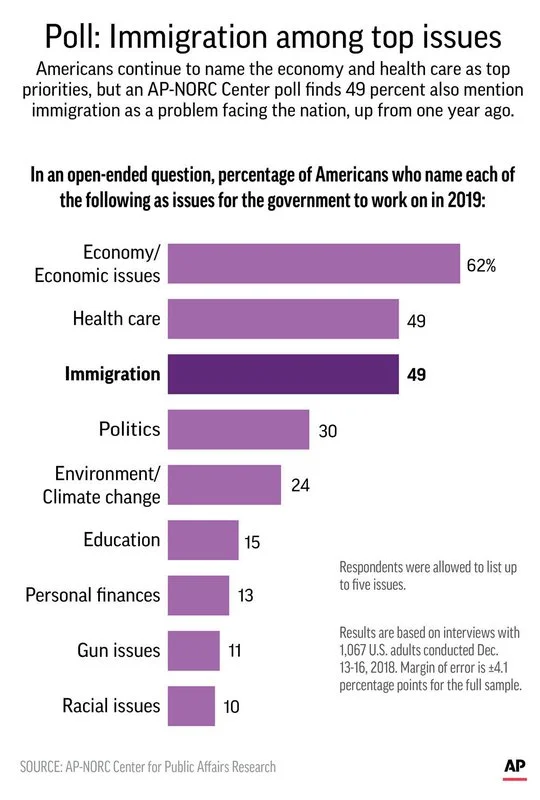
According to an AP-NORC poll, immigration is the third most debated and highly discussed topic amongst Americans.

Ibrahim law Office Immigration Statistics on Election AP News

 The list of immigration-related issues the country could face continues to grow on a daily basis. Among many hot topics, below are just a handful of the more prominent potential changes in 2019:

1. DACA – will it stay or will it go?

2. The effects of public benefit applications and usage by foreign nationals

3. Are “sanctuary cities” legal or do they infringe on law enforcement duties?

4. Denaturalization of foreign-born U.S. citizens

5. The deportation of criminal non-citizens


Much of the immigration-related agencies have been directly impacted by the federal government shutdown. Non-essential employees are furloughed until a budget appropriation is passed and the government is reopened. This is related directly to President Trump’s ongoing push for a wall between the United States and Mexico. Fortunately, USCIS is operated based on fee payments for applications, so most of its functions are not impacted by the shutdown. USCIS already made several concerning changes to its rules and policies in 2018, including implementing authority to recommend to ICE that applicants be required to appear in deportation court, and passing a new rule that scrutinizes green card applicants who are low-income or require public assistance.


We may see these lingering topics come into the spotlight as we continue to edge closer and closer to the highly anticipated 2020 election year.

Curious on how 2019 may impact your plans for bringing a loved one into the United States? Reach out to Ibrahim Law Office, an immigration law firm, to schedule a consultation for yourself or a loved one.

The Longest Government Shutdown In History

The partial government shutdown had serious effects on non-citizens and intending immigrants. Having started on December 22nd, 2018, and ending January 23rd, 2019. It lasted one month, making it the longest government shutdown in history. According to President Trump, the government shutdown relates entirely to the key immigration topic of border protection, with the President seeking funding for his proposed United States - Mexico border wall construction. The wall’s construction is estimated by some sources to exceed $5.7 billion in required funding for its completion. President Trump and Democrat leaders, such as Speaker of the House Nancy Pelosi, and former-Senate Minority Leader Chuck Schumer, have debated what should and should not go into the new budget agreement, with both sides making their opinions very public.

With Trump's proposals failing to pass due to Democratic opposition, there is much confusion among non-citizens about what parts of the federal government are still operating and the impact it has on their lives. What does the partial government shutdown mean to non-citizens and intending immigrants?

Here is what we know so far from the past four weeks of the government shutdown:

  1. Non-detained immigration court (deportation court) hearings where postponed. Those with loved ones currently in detained immigration court proceedings can rest assured that these hearings will go forward;
  2. ICE and CBP continue to operate on limited resources;
  3. USCIS, the immigration agency, is a fee-based agency, and shall continue to operate normally;
  4. Federal courts, which hear cases related to lawsuits brought by non-citizens against the Department of Homeland Security, are likely to close soon, as they have been working on case filing fees which are anticipated to be entirely spent by next week.

The shutdown can be detrimental to those within the immigration process. At Ibrahim Law Office, we have seen deportation trials postponed due to the shutdown, a lack of reasonable communication between the office and the Department of Homeland Security due to their lack of necessary resources, and an inability to submit important filings to the immigration court due to its closure. We have seen confusion amongst our clients about what the shutdown means for their cases. Nonetheless, now that the government shutdown has ended, the federal workers can now continue their work.

To find out more about how the government shutdown may have affected you, or a loved one, reach out to Ibrahim Law LLC immigration firm today to schedule a consultation.