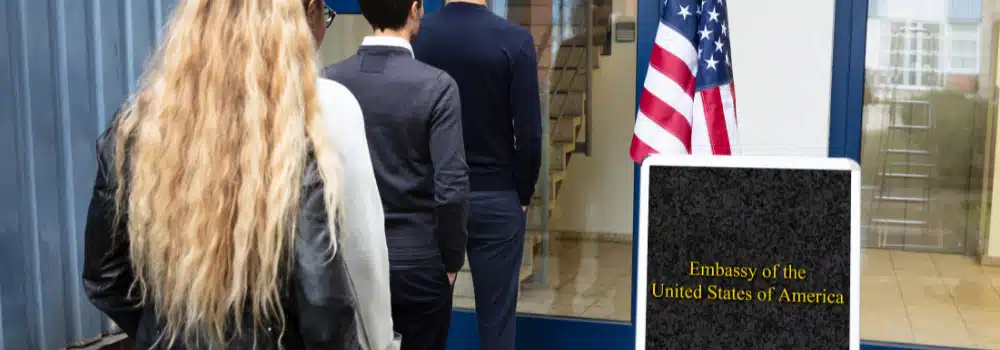
Our U visa attorney in Chicago, IL supports crime victims who have helped authorities investigate and prosecute the perpetrators. The U visa comes with elaborate eligibility requirements applicants must meet in order to qualify, and our dedicated team wants to help you understand the process. A viable path to U.S. residency for those who have aided government and law enforcement, the U visa allows immigrants to stay legally in the U.S. and protects them from deportation. Our U visa lawyer has deep experience helping visa seekers petition for U nonimmigrant status. The U Nonimmigrant Status, also known as the U visa, is a special type of visa that grants legal stay in the USA to immigrants who have been victims of certain crimes that caused them substantial physical or mental abuse. Applicable only for crimes that occurred in the U.S., the victim must also have played a key role in assisting law enforcement to prosecute those crimes. Created to protect immigrant crime victims from deportation, the U visa was established by the Victims of Trafficking and Violence Protection Act (2000). This legislation was intended to help law enforcement investigate and prosecute trafficking, domestic violence, sexual assault, and other crimes. The U visa also provides noncitizens permanent residency status in the U.S. with an opportunity to become citizens and bring qualifying family members into the country. With the help of our Chicago, IL U visa attorney, applicants may be able to secure a Social Security number and work permit, which grants them the rights of citizens, including employment. About 10,000 U visas can be granted each year. Note that U visas for qualifying family members are not included in that number. Once granted, it’s valid for 4 years with the opportunity to apply for a Green Card and become a United States citizen after 3 years. Without a U visa or other documentation granting you the legal right to reside in the U.S., you risk being deported to your home country. Those without this visa cannot legally stay in the U.S., get a work permit, or apply for a Green Card in Chicago after holding the U visa for 3 years. And, if you are abroad, you won’t be able to enter the U.S. without it. To be eligible for a U visa in Chicago, IL, noncitizens must meet certain U visa requirements: Your eligibility for a U visa is inspected by the U.S. Citizenship and Immigration Services (USCIS) upon application. The list of U visa-qualifying crimes includes, but is not limited to: If you are eligible for a U visa, your qualifying family members may apply for it as derivative beneficiaries after you get your visa. Qualifying members are your spouse, children, parents, and unmarried siblings under 18 if you are under 21 years old. If you are 21 and over, only your spouse and children qualify for a U visa. Family beneficiaries must complete Form I-918, Supplement A, Petition for Qualifying Family Member of U-1 Recipient. To apply for a U visa, fill out Form I-918 along with a statement of the criminal activity you are the victim of. You should also provide evidence of your eligibility to USCIS. If you are outside the U.S., follow the instructions the USCIS Service Center sends you. If your application is approved, you continue the process to enter the country by following the steps the consular affairs offers at the nearest Embassy or Consulate give you. There are a variety of documents you may have to submit to complete your application, and an experienced Chicago U visa lawyer could help you determine which are required for you. You may have to submit some or all of the following: If you don’t feel safe receiving USCIS mail at home, you may include a safe address in the mailing address filed on your application. You don’t have to live at that address for the USCIS to send your mail there. Those who are not eligible to enter the U.S. may need to include these documents in their application: Since the U visa in Chicago is granted only to immigrants who have suffered physical and mental abuse, individuals need to include evidence of the crime and the abuse they underwent. Such evidence includes, but isn’t limited to, the following documents: As with a variety of visa types, the U visa application process is very complex, with many forms to fill out and documents to submit to the USCIS service center. Our team of experienced U visa lawyers in Chicago could help you understand and fulfill the requirements. Once you submit all required documents and supporting evidence to USCIS, you must wait for the immigration authorities to review your application and make a decision about granting you a U visa. This can take up to 5 years, which is why it’s advisable to hire a U visa attorney who could work on speeding up the process as much as possible. Whether you need more information on the U visa or help with the application process, hiring an experienced immigration lawyer in Chicago could help your bid for nonimmigrant status. Are you looking for a Chicago U visa lawyer? Our team of dedicated professionals have helped many immigrants overcome the challenges that come with the visa application process. No need to google “U visa lawyer near me”—contact us today! What is the difference between a U-visa, a T-visa, and a VAWA visa? A U visa is issued to immigrants who have been victims of a violent crime, suffering mental or physical abuse, and helped/are helping/are likely to help law enforcement agencies with the investigation and prosecution of the crime. A T-visa is issued to immigrants who have entered the country as a result of human trafficking. U visa-qualified immigrants first arrived in the country and then were subject to human trafficking or another qualifying crime. While a T-visa doesn’t require evidence that you knew you’d be a victim of human trafficking, a U-visa requires strong evidence of the committed crime. The Violence Against Women Act (VAWA) visa is a bit different as it’s issued to immigrant spouses and children of U.S. citizens who have been abused by their spouse or parent. Can you travel outside of the U.S. after the U visa is granted? Yes, you can travel outside the U.S. once you get your U visa, but keep in mind that once you are approved by USCIS, you receive only “U Status,” which allows you to remain in the U.S. A travel visa is not automatically granted, and you must obtain a U Visa in order to re-enter the country. Our Chicago, IL U visa lawyer can help you with this process. How much does a U Visa cost? The U visa is free. You don’t need to pay anything to apply for it. However, depending on your finances, you may need to pay a fee if you are asked to send a waiver.What Is a U Visa?
What if You Don’t Get a U Visa?
What are the U Visa Requirements?
What Crimes Qualify for a U Visa in Chicago?
Are Family Members Covered by U Visas?
How To Apply for a U Visa in Chicago, IL
What Documents Does a U Visa Application Include?
Additional Documents for U Visa Application for People Not Admissible to the U.S.
Substantial Evidence of Victimization for U Visa Application: What Should It Include?
Can a Chicago Immigration Attorney Help with the U Visa Application Process?
Hire a U Visa Immigration Lawyer in Chicago, IL, for Support With Your Petition
FAQ
WRITTEN BY
Michael G. Ibrahim, Esq.
Founder & Principal Attorney
Michael Ibrahim Law Office

12+
YRS EXP
3,000+
CASES
150+
REVIEWS
3
LANGUAGES
Contact Us
CONTACT THE OFFICE
(312) 767-8611
info@ibralaw.com
1655 S. Blue Island Ave., Suite 300
Chicago, IL 60608

"If you are looking for an immigration lawyer who gets results without wasting time, look no further. Michael is extremely knowledgeable and proactive. My case was handled with the utmost precision and within the expected timeframe. I am very impressed with his expertise and fast turnaround."
— Verified Google Review
150+ 5-Star Reviews on Google
OUR PRACTICE AREAS
More Immigration Blogs
About the Author
Michael G. Ibrahim, Esq.
Founder & Principal Attorney — Michael Ibrahim Law Office
EDUCATION
DePaul University College of Law
J.D., 2013
Certificate in Public Interest Law
University of Illinois at Urbana-Champaign
B.A. Political Science & International Studies, 2010
Benjamin Hooks Public Interest Law Scholar
Editor, Journal for Social Justice — DePaul University
BAR ADMISSIONS
Supreme Court of Illinois
7th Circuit Court of Appeals
U.S. District Court – N.D. Illinois
U.S. District Court – E.D. Wisconsin
U.S. District Court – E.D. Michigan
U.S. District Court – S.D. Indiana
MEMBERSHIPS
American Immigration Lawyers Association (AILA)
Illinois State Bar Association
Assyrian American Bar Association
LANGUAGES
English
Spanish
Assyrian Aramaic
Hear From Our
Clients

"One of the top immigration lawyers in Chicagoland. Michael Ibrahim is attentive, supportive, and knowledgeable. One of his best abilities is his availability. He responds to emails with attention and detail, often on the same day. Don't underestimate that in dealing with any immigration matter. He is personable; he does not simply collect fees and treat you like a client but rather like a friend. Your success is his success, and he understands that. If Michael were a surgeon, accountant, or another lawyer in any other field. I would want him. You cannot replicate him.." -Yousef S.
"My wife and I are very thankful for Micheal Ibrahim. Before we hired him, we approached many immigration lawyers over ten years to duplicate documents that were destroyed in a fire. The results were disappointing. Micheal was able to find the lost documents. My wife got her permanent residency. He was always available for us during a stressful time. We would like to thank Michael for his knowledge, professionalism, and expertise. We would definitely recommend Michael for immigration services." -Farzad D.
"Michael took over my case, which had been in immigration proceedings for many years, and I am so glad that he did. He is very professional, kept my husband, and I informed of every step of the process, and gave us the most honest and beneficial advice! Highly recommended for anyone who is in need of a great immigration attorney! Thank you again, Michael!" -Nida F.