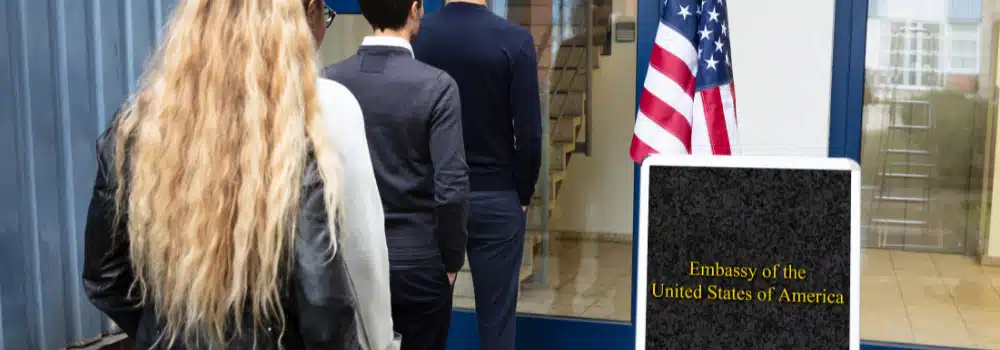
As congress wraps up the 2021 legislative session, the President Joe Biden’s Build Back Better Act, and its intricate adjustments to U.S. immigration policy, could become reality. Since its inception, the Build Back Better Act has been hailed by Biden’s administration and the Democratic caucus as a potential means of immigration reform. Inherent in its design are pathways to permanent residence for individuals including Dreamers, temporary protected status (TPS) recipients and essential workers — a reflection of the president’s promise of reform. A memo from the House Judiciary Committee’s Democratic staff outlines the act’s impacts on immigration. Here are some key elements. Registry Section 60001 of the Build Back Better Act advances the registry date to January 1, 2010. It would therefore allow individuals who have continuously resided in the United States since before that date to apply for LPR status, if they pay a $1,500 fee and meet other legal requirements. Bars to Eligibility for Registry Applicants for registry must show that they are not inadmissible under criminal or national security grounds, that they are not ineligible for U.S. citizenship, and that they possess good moral character (GMC). An individual is permanently barred from establishing GMC (and is thus permanently barred from registry) if they have been convicted of an aggravated felony—a term broadly defined in the INA to include murder, rape, sexual abuse of a minor, robbery, trafficking, crimes of violence, fraud, racketeering, and more. A person who is conditionally barred from establishing good moral character based on less serious past conduct may be able to cure the problem over time by showing evidence of rehabilitation and other positive factors. This provision “reflects our inherent belief in second chances,” the memo said. Enhancements to Green Card Processing Sec. 60003 of the bill allows an individual who is in the United States and eligible for adjustment to LPR status but for the lack of an available visa number to apply for adjustment, upon paying a fee. This will allow individuals to receive work authorization while they wait for a visa number to become available and will prevent dependent children from aging out of eligibility for LPR status. It also allows immigrants who are in the United States to receive an exemption from the numerical limits on immigrant visas and adjust their status to LPR if their immigrant visa petition has been approved for 2 years and they pay a supplemental fee. The memo also makes a point of the economic benefits proponents of the bill claim would come with its reforms to immigration. “Immigrants are innovators, job creators, and consumers with enormous spending power that drives our economy and creates employment opportunities for all Americans,” the statement said.
WRITTEN BY
Michael G. Ibrahim, Esq.
Founder & Principal Attorney
Michael Ibrahim Law Office

12+
YRS EXP
3,000+
CASES
150+
REVIEWS
3
LANGUAGES
Contact Us
CONTACT THE OFFICE
(312) 767-8611
info@ibralaw.com
1655 S. Blue Island Ave., Suite 300
Chicago, IL 60608

"If you are looking for an immigration lawyer who gets results without wasting time, look no further. Michael is extremely knowledgeable and proactive. My case was handled with the utmost precision and within the expected timeframe. I am very impressed with his expertise and fast turnaround."
— Verified Google Review
150+ 5-Star Reviews on Google
OUR PRACTICE AREAS
More Immigration Blogs
About the Author
Michael G. Ibrahim, Esq.
Founder & Principal Attorney — Michael Ibrahim Law Office
EDUCATION
DePaul University College of Law
J.D., 2013
Certificate in Public Interest Law
University of Illinois at Urbana-Champaign
B.A. Political Science & International Studies, 2010
Benjamin Hooks Public Interest Law Scholar
Editor, Journal for Social Justice — DePaul University
BAR ADMISSIONS
Supreme Court of Illinois
7th Circuit Court of Appeals
U.S. District Court – N.D. Illinois
U.S. District Court – E.D. Wisconsin
U.S. District Court – E.D. Michigan
U.S. District Court – S.D. Indiana
MEMBERSHIPS
American Immigration Lawyers Association (AILA)
Illinois State Bar Association
Assyrian American Bar Association
LANGUAGES
English
Spanish
Assyrian Aramaic
Hear From Our
Clients

"One of the top immigration lawyers in Chicagoland. Michael Ibrahim is attentive, supportive, and knowledgeable. One of his best abilities is his availability. He responds to emails with attention and detail, often on the same day. Don't underestimate that in dealing with any immigration matter. He is personable; he does not simply collect fees and treat you like a client but rather like a friend. Your success is his success, and he understands that. If Michael were a surgeon, accountant, or another lawyer in any other field. I would want him. You cannot replicate him.." -Yousef S.
"My wife and I are very thankful for Micheal Ibrahim. Before we hired him, we approached many immigration lawyers over ten years to duplicate documents that were destroyed in a fire. The results were disappointing. Micheal was able to find the lost documents. My wife got her permanent residency. He was always available for us during a stressful time. We would like to thank Michael for his knowledge, professionalism, and expertise. We would definitely recommend Michael for immigration services." -Farzad D.
"Michael took over my case, which had been in immigration proceedings for many years, and I am so glad that he did. He is very professional, kept my husband, and I informed of every step of the process, and gave us the most honest and beneficial advice! Highly recommended for anyone who is in need of a great immigration attorney! Thank you again, Michael!" -Nida F.